- Team Trash: Where people and wildlife meet
- Posts
- Raccoons: Domesticated by a nose?
Raccoons: Domesticated by a nose?
Are raccoons headed toward pet-dom?

Bethany Brookshire
December 07, 2025 • Estimated Reading Time: 10 minutes

I hope you’re all looking forward to our new raccoon overlords. I have to say that, faced with what humans have done, who knows? It might be a better world order.
And I’m sure most of you have seen the recent articles on the subject!
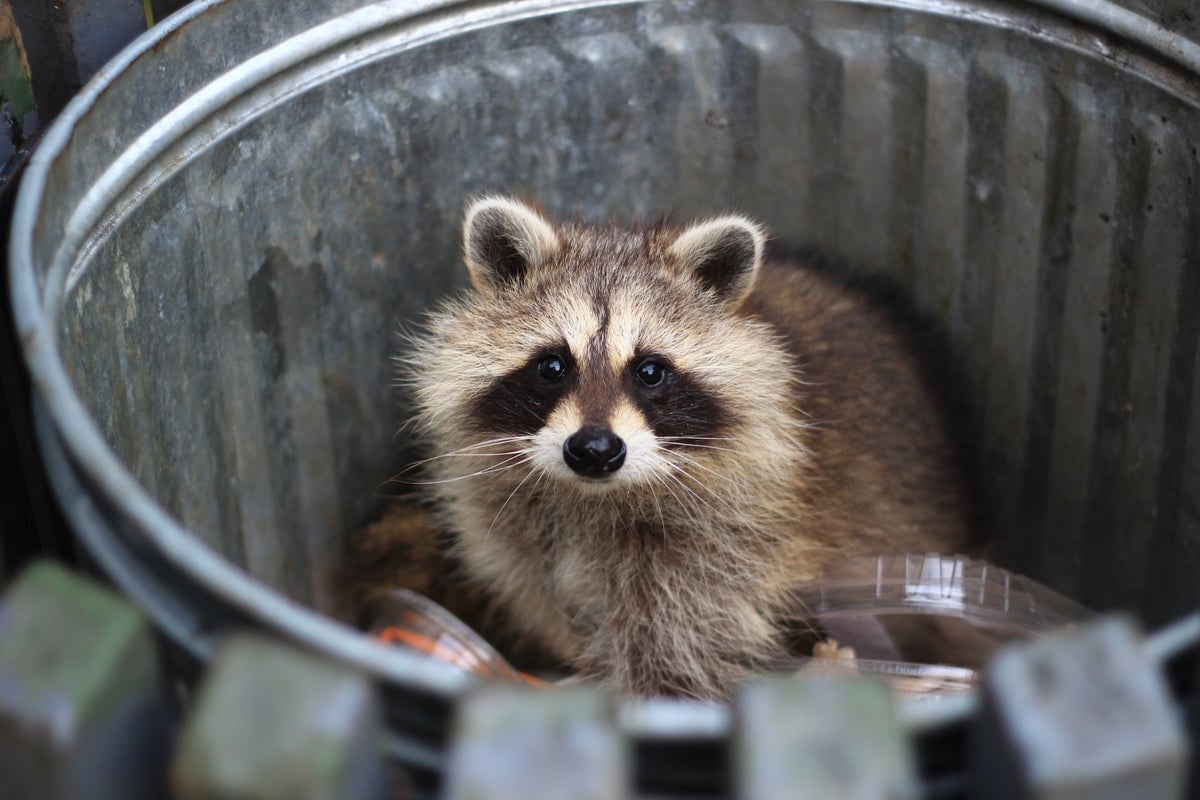

These are only a few of the many, many articles citing a recent study by Rafaella Lesch and colleagues in Frontiers in Zoology.
It’s easy to understand why so many people want to think of raccoons as the next house pet, or the next squirrel. They’re cute, somewhat fluffy, and pop culture believes them to be charmingly mischievous.
Are raccoons on their way to domestication, to associating with us much in the same way rats or wild dogs do? Maybe! But I do not think that is a question that this paper answers.
To be clear: I do not think this paper is bad. The data seem well analyzed and it’s clear the students worked hard! I do not think any of the scientists did anything nefarious! I just have a different interpretation of this data, based on my own understanding of the field. For this newsletter, I did reach out to the main author of the study, and I also got outside comment from someone not involved. And as this is my newsletter, I am also incorporating my opinion. I read about, think about, and write about domestication and human/environment relations quite a bit, and in that time I’ve come to understand a bit about the field, its controversies, and the people involved.
So, let’s all hold our weird, human-like hands, maybe get a little snack, and talk about it.

who got this photo of me? By Photo by Gabriel Tovar on Unsplash
What did this paper do?
“I am fascinated by domesticated animals and how they simply coexist with us. Figuring out and testing the mechanistic pathways, anatomical/morphological changes, etc is just my favorite puzzle to work on,” says Rafaella Lesch, a zoologist at the University of Arkansas at Little Rock. I can relate. I too am pretty obsessed with the wildlife that lives close to us, and I constantly wonder why it does, how its changing, and how we are changing, too.
Lesch and her team of undergraduates (shoutout to undergraduate research and the awesome profs who work with them!) were interested in raccoons living in urban environments. These populations of trash bandits have taken advantage of our generous buffets of trash. There’s no denying that animals that live closer to us, raccoons included, change. For example, raccoons in urban environments avoid crossing roads. They show impressive abilities to solve puzzles. In some of my conversations with raccoon researchers, they’ve noted other behavioral differences, with urban raccoons showing different responses to cognitive tests and being less shy of humans.
But are the trash pandas becoming domesticated? To find out Lesch and her team looked at…nose length. This is based on an idea pitched originally by Darwin and developed Adam Wilkins and Tecumseh Fitch called domestication syndrome.
The idea is this: Domesticated animals exhibit a suite of morphological traits like curly tails, floppy ears, white spots, smaller brains, and shorter noses. You’ve probably seen white spots on puppies, kittens, cows, pigs. These often correspond with “neoteny,” basically that domesticated animals look like more baby-ish versions of themselves. And of course, the animals are tame. They accept our pets, our guidance, our love.
But those are a lot of very disparate traits across a bunch of animals not closely related to each other! How could different species keep coming up with them? The pathway to explain this is called Neural Crest Domestication Syndrome. Early in development, there is a ridge of cells in the embryo called the neural crest in the area what will become the spine. As the embryo develops, the neural crest cells move, migrating toward the limbs, tail, head, and differentiate, becoming all sorts of cell types, like paws and tails and snouts.
The idea in domestication syndrome is that neural crest cells don’t migrate as far, resulting in white boots and and socks, white patches on the chest, curly tails, and shortened noses. If you wanted to find out if an animal associating with you was showing signs of domestication, the argument goes, you would look for some of the symptoms. Like say, a nose shorter than animals not living near humans.
So the scientists looked through nearly 20,000 photos from iNaturalist, a truly prodigious undertaking. “I want to say how great it is to see a group of students working together to publish a paper in a peer-reviewed scientific journal! This work was also a great use of iNaturalist data, which is a valuable resource that is often overlooked,” says Lachie Scarsbrook, a geneticist at the University of Oxford. He was not involved in the study, and I contacted him for what’s called outside comment—another scientist’s perspective on the study. Which is to say, to check myself before I wreck myself.
They looked for raccoon pictures where the whole head was visible, in profile, allowing them to measure the nose length relative to the rest of the head. From nearly 20K photos, the final count was 249 images, with 38 country raccoons and 211 city ones.

After analyzing the nose length, the scientists observed that urban raccoons had, on average, 3.56% shorter snouts than their country cousins.
So. If you accept that domestication syndrome is the measure of a domesticated animal, and that the shorter snouts are indicative of that domestication syndrome, then you could conclude that urban raccoons are showing signs of domestication.
Lesch is very clear that, “If they are on the pathway to domestication they would be in the very early beginning stages of a process that takes thousands of years. So at this stage they would be very far removed from anything we would consider a fully domesticated pet like dogs and cats. At this stage they are still wild animals.”
In the paper, they note that other domesticated animals, namely dogs and cats (and, I would argue, rats), started out in very similar circumstances! They came in after our trash, and came out, er, like this.

Lesch is cautious, as she should be. This is one piece of evidence, not proof. Of course, people in the media loved it, of course we did. It’s loveable! Lesch noted that this is a common misconception that we might all have raccoons on leashes some day soon. “I think the most common misconception is that raccoons are fully domesticated or pets,” she says. “They really are still wild animals (that are currently adapting to living in urban environments) - they might be in the very early stages of a very long domestication process. Our study is really only a small puzzle piece in this much larger picture.”
This snout study is only the first step. “I'm looking forward to future research that will provide more data to actively test the domestication syndrome and NCDS hypothesis itself in urban setups,” she says. That might mean tests for things like white patches, curly tails, or other measures, as well as correlating those measures with relative tameness around people.
I appreciate her caution. I do not doubt what they found at all. I 100% believe they found that urban raccoons had shorter snouts. What I do not believe is that this is evidence of forces nudging them toward domestication. I think there are too many factors for this to win by a nose.
Domestication syndrome is a circular argument
Domestication syndrome sounds really great when you first hear it, and it often jives with people’s personal experiences of the animals they encounter. One of my cats has white paws and a short little snout, after all.
But it breaks down the closer you look into it, notes Scarsbrook. “This magical suite of morphological and behavioral characteristics has been used to set apart domestic and wild populations for centuries, dating all the way back to Darwin. The problem is, at the population level, no domestic animal actually has all of these characteristics consistently.” he says. “Take dogs for instance. No one would argue that a Borzoi and a Pug are domestic, but if we were defining this simply on reduced snout length, only the Pug would count. Similarly, floppy ears are another “tell-tale sign” of domestic animals, so does that mean that make a French Bulldog wild? Not a chance! Regardless of the actual mechanisms underlying these changes (i.e. the neural crest hypothesis), they cannot be used as evidence of domestication.”
The other issue, is that the argument for domestication syndrome is a circular one. Consider: Domesticated animals have curly tails and short snouts and white spots, and are tame. Why are they tame and have curly tails and short snouts and white spots? Well…because they are domesticated. No matter how down into the neural crest cells you get, the argument is that the traits exist because the animals is domesticated, and it’s a sign the animal is domesticated that the traits exist. That is a logical fallacy.
Let’s get a little heated
But the biggest question I have about this study is the issue of heat. As the scientists point out in their paper, there’s a significant snout difference between urban and rural raccoons. They also note there is another driver of snout length differences—heat.
Many mammals living in colder climates have longer snouts than those living in warmer ones. This can be due to body size (larger bodies do better in colder climes), or that there’s more time to warm air in a longer snout. Lesch and her colleagues found a climate effect on their raccoon snouts too, with raccoons from colder areas with longer snouts than ones in warmer areas. Even so, the rural/urban divide persisted, in a colder area like Canada, the raccoons in urban environments would still have shorter snouts than the animals in rural environments nearby.
But when the scientists mentioned heat, my mind immediately went to one important place. The urban heat island.
Urban areas are significantly warmer than rural ones, due to a bunch of factors. Low tree cover, lots of heat absorbing materials, etc etc. If the snouts are shorter…couldn’t that just be a factor of urban raccoons living in warmer areas?
“The heat island effect itself would be one small puzzle piece of what makes the urban environment "urban" among many others,” Lesch says. She considers the warmth of a city part of what makes it urban. I suppose, sure. But then, is it domestication syndrome? Or an artifact of heat? We cannot say.
Tomato TomAHto, Domestication, er, Domestication
Some of my difference in interpretation here could be different definitions of domestication. Here you, dear reader, might be surprised. Surely there is a definition!
There is not. Or rather, there are many. Scientists keep trying (I wrote about the latest effort), but continue to disagree on what exactly domestication is. Lesch told me she uses Melinda Zeder’s popular definition, which is “coevolutionary mutualism between domesticator and domesticate.” Which means that the animal (or plant, or fungus, or bacterium) would evolve to depend to some extent on us, and we would change to some extent to be dependent on it. Raccoons, obviously, wouldn’t meet that standard, and Lesch does not expect them to.
But I also think we need to be careful interpreting data as signals that an organism might even be going that way. There are many, many living things that live near us. Many of those are adapting to, or taking advantage of, the changes we make to our environments. The nice warm houses we build, the lawns we plant, the trash we toss. Some scientists say this is enough, that animals adapting to our world is domestication.
I disagree, and so does Scarsbrook. “There are a million and one reasons the snout of raccoons could be smaller in urban environments, and domestication (as it’s implied here) is not one of them,” he says. “Adaptations that allow animals to exploit human trash aren’t signs of incipient domestication, just natural selection doing its job! For instance, is the socially learnt bin-opening behavior of cockatoos in Australia domestication? Of course not, but because humans are involved, researchers can fall into the trap of conflating these changes with domestication.”
But I and Lesch could just be on different wavelengths about this! She could say that the cockatoos ARE on their way to domestication. And that’s fine! This is an active area of science where people are thinking and changing their minds in real time, which is one reason I am mildly obsessed with it.
Why is everyone talking about it?
I think this paper got the attention it did not because the findings show domestication in progress. Instead, I think people responded to it because of what we want to think about raccoons. This paper doesn’t show domestication syndrome (I don’t think).
It shows what humans want to believe about the animals that live close to us. “We as humans have a tendency to superimpose our own world view on things,” Scarsbrook says. “When it comes to domestication, this means that we extrapolate the modern relationships we have with domestic animals into the past. “Domestication of raccoons” then gets picked up by the media because of our tendency to superimpose the relationship we have forged with dogs, cats, or horses over millennia.”
We know that we will change animals living in our orbit, urban environments affect everything from lizards to plant life to bird tweet timing. We know that we cause so much harm to the natural world. Seeing animals adapt to living near us can feel like hope.
But of course, only some animals are welcome. Rats and mice have absolutely adapted to live near humans—complete with signs of domestication syndrome, and no one is cheering. Raccoons though, they’re adorable! They have little masks! Tiny hands! The story is one we want to hear, and weaknesses in it are ones we want to overlook. Because we all want a pet raccoon.
No matter what, though, on this we all agree. Raccoons are hanging out near us, taking advantage of our trash. Maybe this is the first step to domestication. But they are thousands of years from being dressed in a onesie and greeting you at the door. Except this one:

If any raccoon is domesticated, it’s that one. He’s responding to 2025 just like the rest of us.
References
Stella F Uiterwaal, Sharon L Deem, Stanton H Braude, Anthony I Dell, Megan O’Shea, Jamie Palmer, Sara Parikh, August Wise, Stephen Blake, Space use and environmental drivers of Northern Raccoon (Procyon lotor) activity in an urban park: evidence for avoidance of road crossings, Journal of Mammalogy, 2025;, gyaf077, https://doi.org/10.1093/jmammal/gyaf077
Lauren A. Stanton, Carissa Cooley-Ackermann, Emily C. Davis, Rachel E. Fanelli, Sarah Benson-Amram; Wild raccoons demonstrate flexibility and individuality in innovative problem-solving. Proc Biol Sci 1 July 2024; 291 (2027): 20240911. https://doi.org/10.1098/rspb.2024.0911
Wilkins AS, Wrangham RW, Fitch WT. The "domestication syndrome" in mammals: a unified explanation based on neural crest cell behavior and genetics. Genetics. 2014 Jul;197(3):795-808. doi: 10.1534/genetics.114.165423. Epub 2014 Jul 14. Erratum in: Genetics. 2014 Dec;198(4):1771. PMID: 25024034; PMCID: PMC4096361.
Apostolov, A., Bradley, A., Dreher, S. et al. Tracking domestication signals across populations of North American raccoons (Procyon lotor) via citizen science-driven image repositories. Front Zool 22, 28 (2025). https://doi.org/10.1186/s12983-025-00583-1
M.A. Zeder, Core questions in domestication research, Proc. Natl. Acad. Sci. U.S.A. 112 (11) 3191-3198, https://doi.org/10.1073/pnas.1501711112 (2015).
Where have I been?
Interviewing Chris Hemsworth. The Thor Chris. Yes. Really. About a documentary he just dropped with his father, discussing his father’s Alzheimer’s, and Chris’ own genetic results.
Writing about the importance of social ties in memory. It turns out that “social frailty” weak social ties, can put people at risk. Can an AI help? When the alternative is…no one…maybe.
I so appreciate National Geographic letting me write this big piece on GLP-1s and eating disorders. Because they can potentially really harm some people, even as they help others.
Speaking of domesticates I got to write about cats! House cats, it turns out, arrived in China during the Ming dynasty, but a DIFFERENT cat was prowling around ancient China long before that.
What have I been reading?
I’m sad I didn’t get to write about this one. Chicago’s rat hole? Was a squirrel. Listen most of us wildlife people knew. We hate to tell you. The paws gave it away.
There’s a cool new device to help people survive when they’re trapped under snow! And to test it people agreed to be BURIED FACE DOWN IN THE SNOW. True science champions.
Many people were hype for the release of wolves back in Colorado. Two years later…many of them are dead. It’s more than the circle of life. It’s humans.
Turns out that the more you use AI written by mediocre overconfident white guys…the more you yourself start acting like a mediocre overconfident white guy. Ouch.